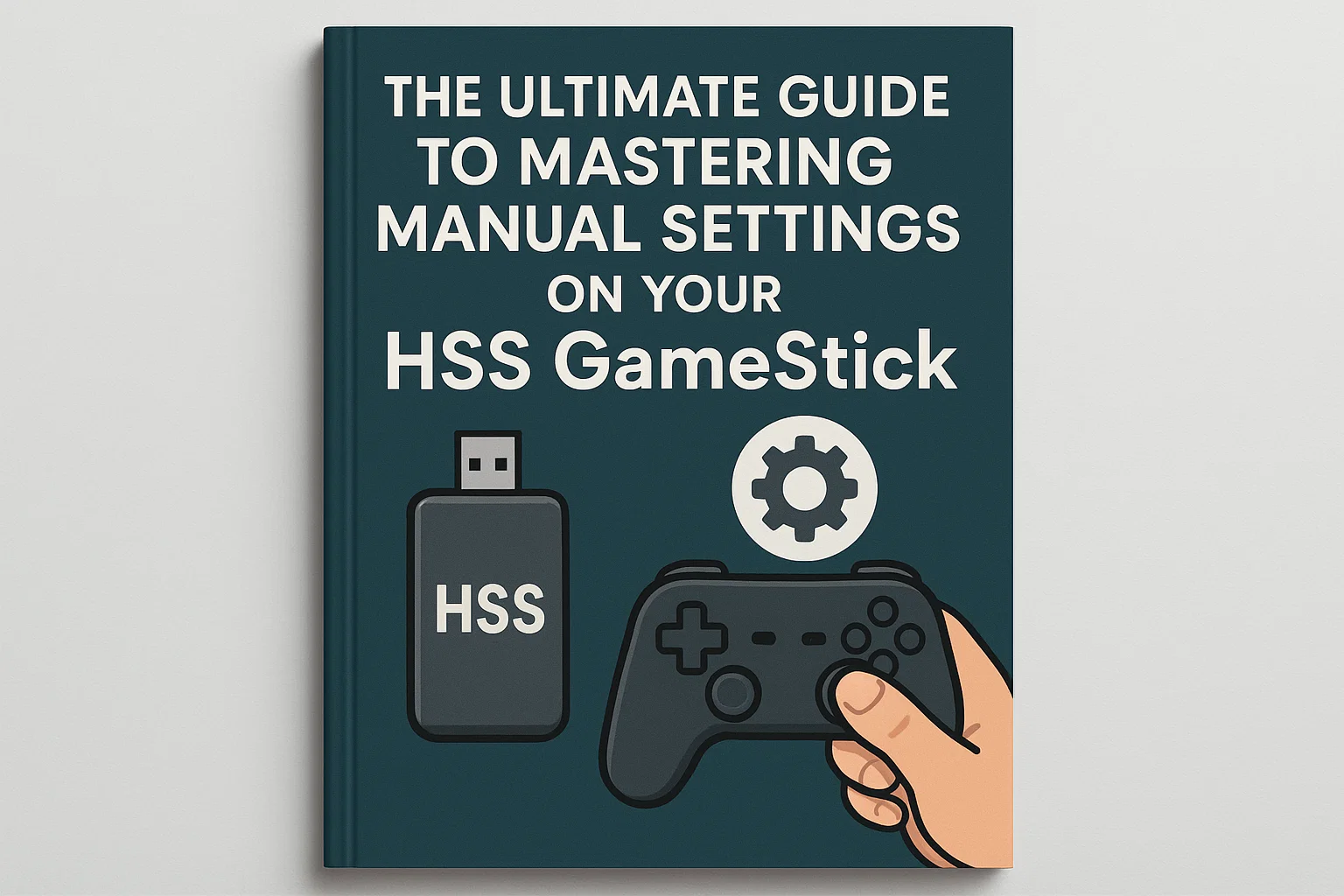
So, you’ve got your HSS GameStick. You’ve plugged it in, downloaded a bunch of your favorite games, and you’re ready to dive in. The out-of-the-box experience is pretty good, right? Games load up, the controller connects, and you’re off to the races. But what if I told you that you’re only experiencing about 70% of what your little gaming powerhouse is truly capable of? That remaining 30%—the difference between a good experience and a truly exceptional, buttery-smooth, visually stunning one—is locked away behind a menu that many users never fully explore: the manual settings on the HSS GameStick.
Tweaking these manual settings hssgamestick enthusiasts swear by can feel daunting. Terms like “resolution,” “frame rate,” “HDMI mode,” and “developer options” might sound like they’re meant for tech wizards, not everyday gamers. But fear not! This guide is designed to demystify every single option, explaining in plain, easy-to-understand language what each setting does, why it matters, and how you can adjust it to create your perfect gaming setup. We’re going to move beyond the automatic defaults and take full manual control, transforming your HSS GameStick from a great plug-and-play device into a finely-tuned instrument tailored specifically for your TV and your gaming preferences. Get ready to unleash performance you didn’t even know you had.
Understanding the Power of Manual Configuration
Why bother with all these complicated-sounding adjustments? Why not just leave everything on “Auto” and let the device figure it out? The answer lies in the incredible diversity of home entertainment setups. Your HSS GameStick is a marvel of miniaturization, packing a capable processor, GPU, and memory into a form factor that fits in the palm of your hand. However, it doesn’t know what kind of TV you have. It doesn’t know if your display is a cutting-edge 4K HDR panel from 2023 or a faithful 1080p LCD from a decade ago. The automatic settings are a best guess, a one-size-fits-all solution that aims for compatibility above all else.
By diving into the manual settings for your HSS GameStick, you are essentially having a direct conversation with the hardware. You’re telling it exactly what your display can handle, eliminating any guesswork and ensuring the signal being sent from the stick to your TV is perfectly optimized. This can lead to a multitude of improvements: a sharper, clearer picture; smoother motion and animations; reduced input lag for more responsive controls; and even better performance in demanding games by reallocating system resources. It’s the difference between letting your car’s computer decide when to shift gears and taking manual control yourself to get the most power and efficiency out of the engine. You become the pilot, not just a passenger.
Navigating to the System Settings Menu
Before we can start tweaking, we need to know where to go. The pathway to the treasure trove of manual options is straightforward, but it’s tucked away just enough that casual users might miss it. First, power on your HSS GameStick and ensure you are on the main home screen launcher. Using your remote or controller, navigate to the top menu bar. You will typically see icons for “Apps,” “Games,” “Settings,” and perhaps “Media” or “Browser.”
Select the “Settings” icon, which often looks like a little gear or cogwheel. This will open the main system settings menu. This menu is the central hub for everything from connecting to Wi-Fi to managing your storage. The layout is usually a list of categories on the left-hand side of the screen, with more detailed options appearing on the right when a category is selected. The exact naming might vary slightly depending on the firmware version of your specific HSS GameStick model, but the core categories remain consistent. From this central settings screen, we will be exploring several key areas, each housing critical manual adjustments that will dramatically enhance your experience.
Optimizing Your Display and Video Output
This is arguably the most impactful section for your visual experience. Getting these manual settings hssgamestick users need to configure correctly is fundamental because it forms the foundation of everything you see on your screen. A misconfigured display output can lead to a blurry picture, incorrect colors, black borders around the image, or even no picture at all. Let’s break down the key options you’ll find here, typically under a category like “Display” or “Screen.”
The first and most important setting is Resolution. Your HSS GameStick likely supports a range of resolutions, from 720p (HD) all the way up to 4K (Ultra HD) on supported models. The automatic setting might default to a safe, lower resolution. If you have a 4K TV, you absolutely want to manually set this to “3840×2160” or “4K x2K” to ensure you’re getting the sharpest, most detailed image possible.
Conversely, if your TV is an older 1080p model, forcing a 4K output can sometimes cause issues or not provide any benefit, so setting it to “1920×1080” (1080p) is ideal. Next, look for Refresh Rate (often listed as Hz). The standard is 60Hz, which is great for most content. However, if you have a TV that supports 120Hz and you’re playing fast-paced games, seeing if a higher refresh rate is an option can make motion incredibly smooth.
Another critical setting is HDR Mode (High Dynamic Range). If you have an HDR-compatible TV, manually enabling HDR can unlock a much wider range of colors and brighter highlights, making games look more vibrant and realistic. You might see options like “HDR Always On,” “Adaptive,” or “Off.” Experiment with “Always On” if your TV supports it. Finally, don’t overlook Overscan/Underscan adjustment. Some TVs, particularly older ones, might zoom in on the image, cutting off the edges of the picture. This setting, sometimes called “Screen Position” or “Scaling,” allows you to manually adjust the image size to ensure you’re seeing every single pixel the GameStick is outputting.
Fine-Tuning Audio for an Immersive Experience
Great gaming isn’t just about what you see; it’s also about what you hear. The audio settings on your HSS GameStick might seem less glamorous than the video options, but configuring them correctly is crucial for immersion, especially when playing story-driven games or competitive titles where audio cues can mean the difference between victory and defeat. The automatic audio setting often defaults to a basic stereo output, which might not be taking full advantage of your home theater sound system or soundbar.
Within the audio settings menu, look for the Digital Audio Format or S/PDIF option. This is where you can tell your GameStick exactly what your audio equipment can handle. If you have a modern AV receiver or soundbar that supports it, manually selecting formats like Dolby Digital Plus, DTS, or even Dolby Atmos can provide surround sound that places you directly in the center of the action. The audio will be more spatial and dynamic. If you’re using the TV’s built-in speakers or a simple stereo setup, selecting PCM is perfectly fine and ensures compatibility.
Another useful manual setting is Audio Delay or Lip-Sync Correction. Occasionally, you might encounter a situation where the audio is slightly out of sync with the video. This can be incredibly distracting. Instead of living with it, you can manually adjust the audio delay, sliding it forward or backward by milliseconds until the sound and picture are perfectly matched. This level of fine-grained control is only possible when you venture beyond the automatic configurations and is a prime example of the power held within the manual settings hssgamestick audio menu.
Configuring Controller and Input Settings
The controller is your primary interface with the games on your HSS GameStick, so ensuring it’s perfectly tuned to your preferences is a must. While most controllers work great right out of the box, the manual settings offer a layer of customization that can improve comfort, responsiveness, and accessibility. This is especially important if you find the default controls a bit too sensitive or not sensitive enough for your gaming style.
One of the most valuable features to look for is Button Remapping or Custom Layouts. Some games might have control schemes that feel awkward to you. Instead of struggling to adapt, you can often use the system-level settings to manually reassign what each button does. Want to swap the A and B buttons? You can probably do that here. This is a godsend for creating a consistent control experience across all your games. Another key setting is Stick Dead Zone adjustment. The dead zone is the amount you have to move the analog stick before the game registers the input.
A large dead zone can make controls feel sluggish and unresponsive, while a dead zone that’s too small can cause unintended movements or “drift.” Manually finding the sweet spot for your specific controller can make aiming in shooters or steering in racing games feel incredibly precise. Furthermore, look for Vibration Intensity controls. If the rumble effect is too jarring or too weak, you can manually dial it up or down to a level that feels right for you, adding to the immersion without being a distraction. Taking the time to explore these manual settings hssgamestick input options personalizes your interaction with the device on a fundamental level.
Network and Connectivity Tweaks for Stable Performance
In today’s world of digital game downloads, cloud saves, and online multiplayer, a stable and fast internet connection is the lifeblood of your HSS GameStick. The Wi-Fi settings are usually set to auto-connect, but there are several manual adjustments you can make to improve your connection stability and speed, which directly translates to smoother downloading, less lag in online games, and higher streaming quality.
The most significant manual change you can make involves your Wi-Fi Band. Most modern routers broadcast two bands: 2.4 GHz and 5 GHz. The 2.4 GHz band has a longer range but is generally slower and more susceptible to interference from other devices like microwaves and cordless phones. The 5 GHz band is faster and has less interference but has a slightly shorter range. If your HSS GameStick is relatively close to your router, manually forcing it to connect to the 5 GHz band can provide a noticeable speed boost and a more reliable connection for online gaming.
For advanced users, manually setting a Static IP Address for your GameStick can sometimes improve network reliability. By default, your router assigns a dynamic IP address that can change. Setting a static IP ensures your device always has the same address on your home network, which can be helpful for certain network configurations and port forwarding if you ever need to do that. While these network tweaks might seem technical, they are powerful tools within the manual settings hssgamestick network menu for eliminating one of the most common sources of frustration: a spotty internet connection.
Managing Storage and Applications Like a Pro
The HSS GameStick, like any Android-based device, has finite internal storage. As you download more games and apps, you’ll inevitably need to manage that space efficiently. While there are automatic cleanup tools, taking manual control gives you a much clearer picture of your storage health and allows you to make smarter decisions about what to keep and what to remove.
Within the storage settings, you can manually see a detailed breakdown of what is using your space: games, apps, cached data, and other files. This allows you to make informed choices. Instead of blindly deleting a large game, you might find that clearing the app cache for several applications can free up a significant amount of space without deleting any of your progress or data. The cache is temporary data stored to help apps load faster, but it can grow large over time and can be cleared safely. You can also manually force-stop applications running in the background that you aren’t using, freeing up precious RAM and potentially improving system performance and battery life for your controller.
For devices that support it, the manual settings also provide the option to Format an External Drive or adopt external storage as internal memory. This is a game-changer for serious gamers. By plugging in a compatible USB drive or microSD card (if your model has a slot), you can dramatically expand your available storage, allowing you to install dozens more games without constantly worrying about space. Managing this process manually ensures it’s done correctly and that you’re getting the most out of your expanded storage solution.
Exploring Advanced and Developer Options
This is the deepest layer of the manual settings hssgamestick system, and it’s where you can truly unlock the device’s potential—but it also comes with warnings. The “Developer options” menu is hidden by default because the settings here are intended for software developers and can potentially cause instability if used incorrectly. However, for the savvy user, a few of these options can be incredibly useful.
To unlock Developer options, you typically need to go to “About device” or “System” and tap on the “Build number” field seven times. You’ll get a message confirming you are now a developer. Back in the main settings menu, you’ll now see “Developer options.” Inside, you’ll find a vast array of technical switches. One useful setting is USB Debugging, which allows your HSS GameStick to communicate with a computer running the Android SDK (Software Development Kit), useful for advanced troubleshooting or sideloading apps. Another is Stay awake, which forces the screen to never sleep while charging, great for long downloads.
You might also find options to limit background processes, which can free up RAM, or force GPU rendering for 2D apps, which can sometimes improve graphical performance. The golden rule of the Developer options menu is: do not change a setting unless you are 100% sure you know what it does. While you can’t truly “brick” the device from here, you can cause apps to crash or the system to behave oddly. A simple reboot often fixes these issues, but it’s best to proceed with caution and research any option before enabling it.
Troubleshooting Common Issues with Manual Settings
Inevitably, when you start changing settings, you might run into a problem. Maybe you selected a resolution your TV doesn’t support, and now the screen is black. Perhaps you changed a controller setting, and now it won’t respond. Don’t panic! This is a normal part of the tinkering process, and every problem has a solution. Knowing how to recover is a key part of mastering the manual settings on your HSS GameStick.
The most common issue is a incorrect display mode. If you set a resolution or refresh rate that your TV cannot display, the screen may go blank or show an “Unsupported Signal” error. The fix for this is simple: wait. The HSS GameStick, like most devices, will automatically revert to the previous safe video setting if no input is detected from the user (i.e., you don’t confirm the new setting) after 15 seconds. So if you change a setting and the screen goes black, simply wait without pressing anything. The device will time out and revert, and your picture will come back.
If you’ve changed a setting that causes the system to become unstable or unresponsive, you can perform a forced reboot. This is usually done by holding down the physical power button on the GameStick itself (if it has one) or by unplugging the device from power for 30 seconds and then plugging it back in.
For more stubborn issues, you may need to boot into Safe Mode (often done by holding a specific button on the remote during boot) to disable recently changed settings or problematic apps. As a last resort, the settings menu offers a Factory Reset option, which will wipe all your changes and personal data and return the HSS GameStick to its original out-of-the-box state. It’s a nuclear option, but it guarantees a fresh start.
Creating and Saving Your Perfect Custom Profile
After spending all this time carefully adjusting every aspect of your HSS GameStick, the last thing you want is to lose all your preferences. Unfortunately, the system doesn’t have a built-in “profile saver,” but there are strategies you can use to preserve your hard work. The first and most important step is to write down your key settings. Keep a small notepad or a note on your phone with the specific values you’ve settled on for resolution, refresh rate, audio format, and any unique developer options you’ve enabled. This seems old-school, but it’s the most reliable backup.
If you ever need to perform a factory reset or your settings get accidentally wiped, having this list will allow you to quickly reconfigure your device to its optimal state without having to remember everything or go through the trial-and-error process again. Think of it as your personal HSS GameStick recipe for success. Furthermore, be mindful of system updates.
While firmware updates generally aim to preserve your settings, it’s not unheard of for a major update to reset certain preferences to their defaults. After updating your device, it’s a good practice to quickly skim through the manual settings hssgamestick menus to ensure everything is still configured the way you like it. This proactive approach ensures you always get the consistent, high-quality experience you’ve worked to create.
Frequently Asked Questions
What are the most important manual settings hssgamestick users should adjust first?
The absolute first stops should be the Display and Video settings. Manually setting the correct resolution for your TV (e.g., 1080p or 4K) and enabling HDR if your display supports it will provide the most immediate and dramatic improvement to your visual experience. After that, configuring your audio output to match your sound system (e.g., switching from PCM to Dolby Digital) will greatly enhance immersion.
I changed a video setting and now my screen is black. What do I do?
This is a common scare, but it’s easily fixed. The HSS GameStick has a built-in safety feature. If you change to a display mode that isn’t supported and then can’t see the screen to change it back, simply wait for about 15-20 seconds without pressing any buttons. The device will not receive a confirmation and will automatically revert to the previous, working video setting.
Will tweaking manual settings void my warranty?
No, adjusting the software-based manual settings within the Android system will not void your hardware warranty. These are official options provided by the operating system for you to customize your experience. The only thing that would void your warranty is physically opening up and modifying the hardware itself, which is not recommended.
How can I improve my Wi-Fi speed using manual settings hssgamestick options?
The best way is to manually force your HSS GameStick to connect to your router’s 5 GHz Wi-Fi band instead of the 2.4 GHz band, provided your router supports it and the GameStick is within a good range. The 5 GHz band is typically faster and suffers from less interference, which can lead to better download speeds and reduced lag in online games.
Is it safe to use the “Developer options” menu?
It is safe to explore as long as you are cautious. Do not change settings at random. Research a specific option online first to understand its function. Changing the wrong developer setting can cause apps to misbehave or the system to become unstable, but it won’t permanently damage your device. A simple reboot will usually fix any problems caused by a changed developer option.
The Ultimate Guide to the UndergrowthGames Custom Controller: Unleashing the UGGControlMan
Conclusion
Mastering the manual settings on your HSS GameStick is a journey from being a casual user to becoming a power user. It transforms the device from a generic media player into a personalized gaming console that is perfectly harmonized with your specific home theater setup and personal preferences. The menus might seem technical at first glance, but as we’ve broken down, each setting has a clear and impactful purpose. From the crystal-clear visual fidelity achieved through correct resolution and HDR settings to the immersive surround sound from a properly configured audio output, the quality-of-life improvements are profound.
Taking control of your controller’s responsiveness, network stability, and storage management empowers you to solve problems and optimize performance proactively. While the Developer options should be treated with respect, they offer a glimpse into the advanced potential of the Android platform underpinning your device. Remember, the goal isn’t to max out every single slider; it’s to thoughtfully adjust each setting to create the most enjoyable, smooth, and reliable gaming experience for you. So, grab your controller, navigate to that settings menu, and start unlocking the true potential of your HSS GameStick today. Your perfect setup is waiting.