
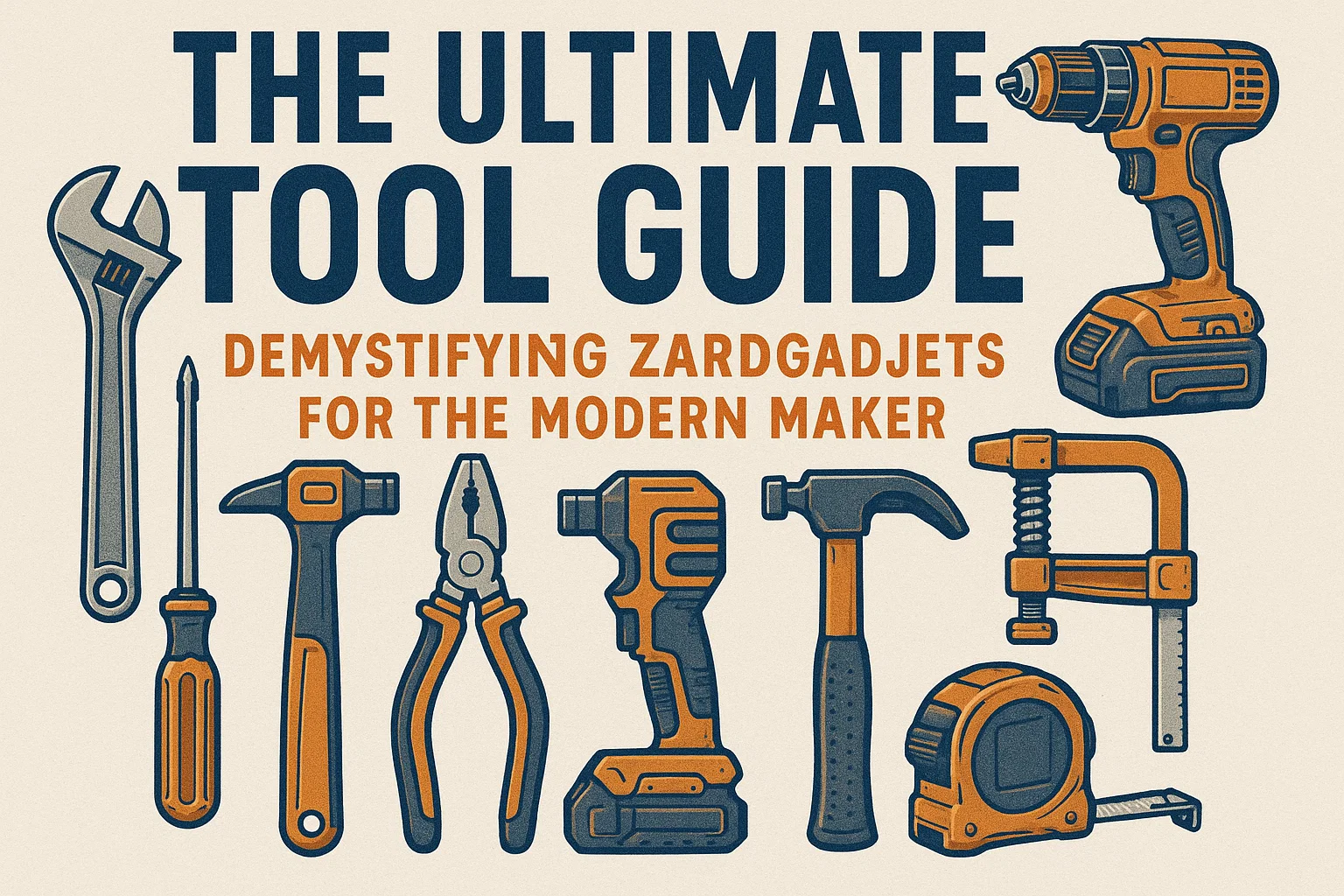
Welcome to the workshop, the garage, the backyard, and the heart of every do-it-yourself project. Whether you’re assembling flat-pack furniture for the first time or building a custom deck from the ground up, the journey from idea to finished product is paved with tools. But let’s be honest, the world of tools can be overwhelming. Aisles at the hardware store are lined with thousands of specialized instruments, and for every job, there seems to be a mysterious gadget designed to make it easier. This is where having a reliable tool guide becomes your most valuable asset. It’s the map that helps you navigate this vast landscape, separating the essential must-haves from the nice-to-haves, and empowering you to work smarter, not just harder. This comprehensive resource is designed to be that map, your go-to manual for understanding not just the basics, but also the more advanced and innovative equipment that can transform your capabilities.
This article is your all-access pass to building and refining your toolkit. We’re going to move beyond the simple hammer and screwdriver to explore the core categories of tools that every enthusiast should know. We’ll delve into the critical importance of precision, the non-negotiable rules of safety, and the smart strategies for maintaining your investment. Furthermore, we will demystify the concept of zardgadjets—a term we use to describe those unique, often specialized tools and accessories that solve specific, frustrating problems. A true master isn’t just someone who owns every tool; it’s someone who understands the purpose of each one and knows how to wield it with confidence and skill. Consider this the first step on your path to that mastery, a deep dive into the art and science of turning raw materials into finished creations.
Understanding the Foundation: What Exactly Are We Talking About?
Before we dive into the specific tools, it’s important to establish a common language. In the broadest sense, a tool is any device or implement used to carry out a particular function. In the context of DIY and construction, this typically means objects designed to apply force, measure with accuracy, join materials, or shape surfaces. However, the philosophy behind a well-curated toolkit is more nuanced. It’s about solving mechanical problems efficiently and safely. A foundational tool guide emphasizes starting with versatility. The initial goal isn’t to own a tool for every conceivable scenario, but to possess a core set of reliable instruments that can handle a wide array of common tasks, from tightening a loose cabinet handle to hanging a picture frame perfectly level.
This foundational approach also involves understanding the different types of tools. There are hand tools, which are powered solely by human effort—think wrenches, saws, and pliers. Then there are power tools, which use electricity, batteries, or compressed air to significantly multiply the force and speed of the user. Within these categories are endless sub-genres: cutting tools, fastening tools, measuring and layout tools, and finishing tools. The world of zardgadjets often lives in the intersections of these categories, offering hyper-specific solutions. Appreciating this hierarchy and the role each type of tool plays is the first step in moving from a casual user to a informed craftsperson. It allows you to analyze a project, break it down into its constituent actions (measure, cut, fasten, finish), and select the perfect tool for each step.
The Indispensable Hand Tools: Your First Line of Defense
No toolkit, no matter how advanced, is complete without a solid collection of hand tools. They are the workhorses, the reliable companions that don’t require a power outlet or a charged battery. They teach fundamental mechanics and force application, building the skills that make using power tools later on much safer and more effective. A basic set should include a variety of screwdrivers (both flathead and Phillips head in multiple sizes), a claw hammer for driving and pulling nails, an adjustable wrench for tackling nuts and bolts of various sizes, and a set of pliers—including slip-joint for general gripping and needle-nose for working in tight spaces. These tools form the absolute bedrock of DIY capability.
Beyond these basics, a few other hand tools quickly prove their worth. A quality tape measure is arguably the most important tool you own, as the old adage goes, “measure twice, cut once.” A utility knife with a retractable blade is endlessly useful for opening packages, scoring drywall, or trimming carpet. A level, whether a small torpedo level or a longer 2-foot model, is essential for ensuring your work is straight and true, preventing that slightly crooked shelf from driving you mad every time you look at it. As you progress, you might add specialized hand tools like a set of chisels for woodworking, a hand saw for quick cuts, or a stud finder for hanging heavy items. These tools are the embodiment of simplicity and effectiveness, and a good tool guide will always stress their eternal relevance, even in a high-tech workshop.
Powering Up: An Introduction to Essential Power Tools
If hand tools are the steadfast infantry, power tools are the special forces—bringing immense speed, power, and precision to targeted tasks. For beginners, the world of power tools can be intimidating, but mastering a few key players will exponentially increase the scope of projects you can confidently tackle. The cordless drill/driver is undoubtedly the gateway tool. It’s not just for drilling holes; with a driver bit, it makes driving screws a effortless task, saving your wrists and a tremendous amount of time. When selecting one, consider a reputable brand and a system where the batteries are interchangeable with other tools you might buy in the future, a key piece of advice from any savvy tool guide.
Once comfortable with a drill, the next logical step is often a circular saw for making straight cuts in lumber and sheet goods, or an orbital sander for transforming rough wood into a smooth, finish-ready surface. For more detailed work, a jigsaw allows for curved and intricate cuts. As your projects grow in complexity, you might graduate to a miter saw for perfect angled cuts or a table saw, which becomes the central station for any serious woodworking shop. Each power tool amplifies your ability but also demands a greater respect for safety. Understanding their operation, their kickback tendencies, and always using appropriate safety gear like goggles and hearing protection is not optional. This is where knowledge from a detailed tool guide is critical, transforming a potentially dangerous instrument into a safe and empowering extension of your own creativity.
The Realm of Zardgadjets: Specialized Solutions for Unique Problems
Now, let’s venture into the fascinating world of zardgadjets. This playful term encompasses all those unique, clever, and sometimes oddly specific tools that you never knew you needed until you encounter a problem they are perfectly designed to solve. They are the heroes of niche tasks, the gadgets that prevent frustration and save hours of clumsy workarounds. For example, a stud finder is a common zardgadjet, but a more advanced version with deep-scanning capabilities and AC wire detection is a premium tool guide recommendation for serious renovators. These aren’t the tools you buy on day one, but the ones you acquire as you dive deeper into a particular hobby or trade.
Another classic example is the oscillating multi-tool. This versatile zardgadjet might not be the first power tool you buy, but many seasoned DIYers will attest it becomes one of the most reached-for. With its rapidly vibrating head, it can accept a myriad of attachments: it can sand in tight corners, cut through drywall to create outlet openings, plunge-cut into flooring, scrape off old adhesive, and even grout tiles. It solves dozens of problems that would be incredibly difficult with any other single tool. Other zardgadjets include tools like a laser level for perfect layout over long distances, a pocket-hole jig for creating strong, hidden joints in wood, or a digital angle finder for replicating complex angles with perfect accuracy. A comprehensive tool guide introduces you to these game-changers, helping you identify which specialized tools are worth the investment for your specific interests.
The Critical Role of Measurement and Layout
You can have the most powerful saw or the strongest drill in the world, but if your measurements are off, your project will be a failure. This is why the measurement and layout phase of any project is arguably the most important, and the tools for this job deserve their own category of respect. It starts with a reliable tape measure, but it certainly doesn’t end there. A combination square is a small but mighty tool for marking perfect 90 and 45-degree angles, checking the squareness of your assemblies, and acting as a precise marking gauge. A speed square, popularized in framing, is another quick and durable tool for marking angles and even guiding a circular saw for straight cuts.
For layout on a larger scale, chalk lines allow you to snap long, straight guidelines over sheet goods or subfloors. A laser level projects a perfectly level or plumb line across an entire room, making it simple to install wall cabinets, tile, or wainscoting without constant manual checks. These tools are the unsung heroes of professional-looking results. They are the difference between a deck that looks like it was built by a pro and one that looks… well, homemade. Investing in good quality layout tools and learning how to use them properly is a cornerstone of any legitimate tool guide. Precision here trickles down to every subsequent step, ensuring every cut and every joint is exactly where it’s supposed to be.
Safety First: The Non-Negotiable Tools for Protection
A discussion about tools is incomplete—and irresponsible—without a dedicated focus on safety. Your most important tool is your brain, and using it to prioritize safety is rule number one. Safety equipment is not an optional accessory; it is a fundamental part of the toolkit. The basics include safety glasses or goggles to protect your eyes from flying debris, dust, and splashes. Every time you make a cut, drive a screw, or strike metal, you should be wearing eye protection. It’s a simple habit that prevents life-altering injuries. Similarly, hearing protection is crucial when operating loud power tools like saws, routers, or jackhammers. Disposable earplugs or over-ear mufflers preserve your hearing for the long term.
Beyond eyes and ears, consider respiratory protection. Sanding, cutting, or working in a dusty environment requires a dust mask at a minimum, while working with chemicals, paints, or solvents might necessitate a respirator with appropriate cartridges. Don’t forget your hands—a good pair of work gloves protect against splinters, sharp edges, and abrasions, though they should be removed when working with rotating power tools where they could get caught. Finally, sturdy footwear, like steel-toed boots, can protect your feet from falling objects. A proper tool guide doesn’t just tell you what to buy; it instills a culture of safety. It emphasizes that taking a few seconds to gear up is never a waste of time. It’s the investment that allows you to enjoy your hobby or trade for years to come.
Tool Maintenance: Keeping Your Investment in Peak Condition
Tools are an investment, and like any good investment, they require care to maintain their value and performance. A rust-covered, dull, or malfunctioning tool is not only frustrating to use but can also be dangerous. Basic maintenance is simple and immensely rewarding. Keep your tools clean. Wipe down metal surfaces with a lightly oiled rag after use to prevent rust. This is especially important for hand tools. Keep toolboxes and storage areas dry and organized to prevent damage and make it easy to find what you need. For cutting tools like saw blades, chisels, and plane irons, learning to sharpen them is a game-changer. A sharp tool requires less force to use, gives a cleaner cut, and is far safer than a dull one that can slip or bind.
Power tool maintenance involves keeping air vents clear of dust, checking cords for damage, and ensuring batteries are stored and charged according to the manufacturer’s instructions. Lubricating moving parts on occasion, as specified in the manual, will keep everything running smoothly. For pneumatic (air) tools, using a water filter/regulator/lubricator combo on your air compressor is essential to keep moisture out of the tools and provide them with a light oiling. A thorough tool guide dedicates time to this upkeep, framing it not as a chore, but as a form of respect for the instruments that enable your creativity. A well-maintained toolkit is a reliable one, ready to perform at a moment’s notice, project after project.
Building Your Toolkit Over Time: A Strategic Approach
The prospect of building a complete workshop can be daunting and expensive if approached all at once. The smartest strategy is to build your toolkit organically, project by project. Don’t go out and buy a truckload of tools because you think you might need them someday. Instead, start with the essential hand tools we discussed. Then, choose a simple beginner project, like building a basic bookshelf or a planter box. Buy or rent the specific tools required for that project—perhaps a drill and a circular saw. Once you’ve mastered that, move on to a slightly more complex project that might require a new tool, like an orbital sander for a finer finish.
This project-based approach has multiple benefits. It spreads the cost out over time, making it more manageable. It ensures that every tool you purchase has an immediate and defined purpose, so you learn how to use it correctly right away. It also prevents you from wasting money on cheap, low-quality “toolkit in a bucket” sets that often include many items you’ll never use, while skimping on the quality of the tools you will use daily. Let your growing skills and ambitions dictate your acquisitions. This curated, intentional approach, often recommended by a wise tool guide, results in a collection of high-quality, well-understood tools that you truly value and know how to use effectively, rather than a garage full of dusty regrets.
The Digital Frontier: Apps and Software as Modern Tools
In the 21st century, the definition of a “tool” has expanded beyond the physical. For the modern maker, smartphone apps and computer software have become indispensable parts of the toolkit. These digital zardgadjets offer incredible functionality that was previously available only to professionals. Augmented Reality (AR) apps allow you to visualize how a piece of furniture will look in your room before you build it. Project planning apps can help you create cut lists from your designs, optimizing material use and minimizing waste. There are apps that act as advanced levels, sound meters, and even metal detectors using your phone’s built-in sensors.
On the computer, 3D modeling software like SketchUp Free allows you to design projects in a virtual space, working out all the kinks and measurements before you ever make a first cut. This can save hundreds of dollars in wasted materials. YouTube itself is perhaps the greatest tool guide ever created, offering visual, step-by-step tutorials for virtually every task imaginable. Online calculators can quickly figure out complex angles for trim work or the amount of paint, concrete, or flooring you need for a job. Embracing these digital tools doesn’t replace the need for physical skill, but it massively enhances your planning, precision, and efficiency, making you a more capable and confident maker overall.
Conclusion
The journey through the world of tools, from the foundational hammer to the most specialized zardgadjet, is a continuous path of learning and empowerment. A great toolkit is more than a collection of metal and plastic; it is a set of possibilities. Each tool represents a skill acquired, a problem solved, and a barrier removed between an idea and its physical realization. This ultimate tool guide has aimed to provide not just a list of recommendations, but a framework for thinking about tools: understanding their purpose, respecting their power, maintaining their condition, and acquiring them strategically. The goal is to foster a mindset of capability and safety. Remember that the best tool for any job is the one you know how to use correctly and safely. So start with the basics, tackle projects that excite you, add to your collection with intention, and never stop being curious about the next zardgadjet that can make your work even better. Now, go make something amazing.
Why Use Fidzholikohixy: The Ultimate Guide to Unlocking Its Benefits
Frequently Asked Questions
What is the absolute first tool I should buy as a beginner?
For anyone just starting out, a high-quality cordless drill/driver combo kit is the single most impactful first purchase. It’s incredibly versatile, handling both drilling holes and driving screws, which are fundamental tasks in a huge range of projects. While a basic set of hand tools like a hammer, screwdrivers, and tape measure is essential, the drill/driver will truly unlock your potential and save you significant time and effort compared to doing everything by hand.
How can I identify a quality tool versus a cheap one that will break?
Identifying quality involves looking at a few key factors. First, feel the weight and balance; a quality tool often has a solid, substantial feel without being clumsily heavy. Second, inspect the materials; look for hardened steel on wrench jaws and screwdriver tips, and avoid plastic components in high-stress areas where metal is required. Third, consider the brand reputation; established brands with good warranties generally offer more reliability. Finally, if possible, test the mechanism. A smooth-acting switch on a power tool or a precisely machined adjustment on a hand tool are good indicators of careful manufacturing.
Where does the term “zardgadjets” come from in this context?
In this article, we use the term “zardgadjets” as a playful and memorable placeholder for the vast universe of specialized, innovative, and sometimes unconventional tools and gadgets. It’s meant to capture the spirit of those unique items that aren’t found in a basic toolkit but excel at solving very specific problems. Think of it as a catch-all category for the clever inventions and niche accessories that make experienced tradespeople and DIYers say, “Wow, I need one of those!”
Is it worth buying expensive branded power tools, or will store brands suffice?
This depends heavily on your intended use. For a casual user who might use a tool a few times a year, a reputable store brand from a major retailer can offer excellent value and sufficient performance. However, for frequent use, professional work, or serious hobbyists, investing in a top-tier brand is usually worth it. The advantages often include better build quality, more power, superior ergonomics, longer battery life (for cordless), better warranty support, and access to a full ecosystem of compatible tools and batteries. A good strategy is to invest in a pro-grade brand for your most-used tools and consider value options for more specialized items you use infrequently.
What is the one most important safety tip from this entire tool guide?
While all safety rules are critical, the single most important tip is to always wear approved safety glasses or goggles. Your eyes are irreplaceable. Nearly every task in the workshop, from hammering and drilling to sawing and grinding, can create flying debris, dust, or splashes that pose a permanent threat to your vision. Making eye protection an non-negotiable habit, every single time you pick up a tool, is the easiest and most effective way to ensure a lifetime of safe and enjoyable building.